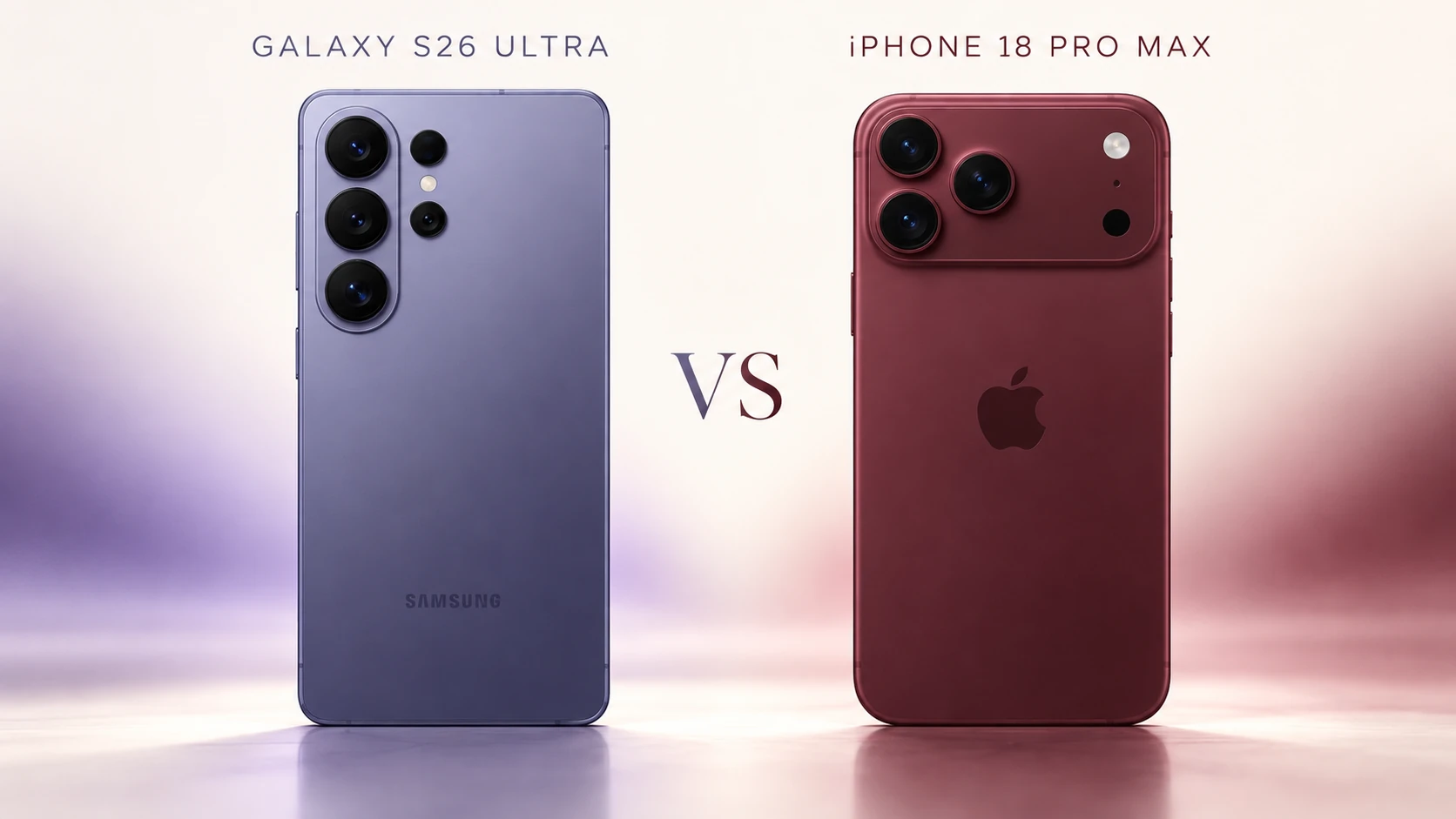
Updated October 28, 2026. The Galaxy S26 Ultra is the more direct choice if screen privacy and two native telephoto options matter most. The iPhone 18 Pro Max makes more sense if you want to stay with Apple and use its variable-aperture main camera. Neither specification sheet proves a universal winner: the useful question is which differences you will use every day.
Quick comparison
| Feature | Galaxy S26 Ultra | iPhone 18 Pro Max |
|---|---|---|
| Display | 6.9-inch QHD+ AMOLED; 1–120Hz | 6.9-inch OLED; up to 120Hz |
| Processor | Snapdragon 8 Elite Gen 5 for Galaxy | A20 Pro |
| Main camera | 200MP; f/1.4 | 48MP; variable f/1.48–f/4.0 |
| Native telephoto | 10MP 3x and 50MP 5x | 48MP 100mm, 4x |
| Ultra-wide | 50MP | 48MP |
| Weight | 214g | 249g |
| Charging reference | Up to 60W wired; 25W wireless | 50% in around 15 min with compatible 60W-capable AVS adapter; up to 25W MagSafe |
| Distinctive feature | Built-in Privacy Display | Variable main-camera aperture |
Design and comfort: the weight gap matters
These are both large phones, so the diagonal measurement does little to separate them. Samsung is 35g lighter on the published figures. That is a meaningful reason to handle both with a case before buying, especially if you read one-handed, navigate on foot or hold the phone through a long video call.
The rear designs also differ visibly. Samsung groups its largest lenses vertically, while Apple uses a broad raised camera plateau. Check whether your preferred case protects the camera surround and still rests securely on a desk. A cover photograph cannot tell you how either phone balances in your hand.
Display: privacy is the practical differentiator
Both offer a large adaptive-refresh screen. The useful Samsung distinction is its integrated Privacy Display, which can limit off-axis visibility when enabled. If you regularly read messages or work documents on public transport, that may be more useful than a small difference in a headline brightness figure.
Our recommendation is to compare text readability, reflections and side-angle visibility at comfortable brightness. Manufacturer peak-brightness labels can describe different conditions, so they are a poor shortcut for deciding which screen you personally prefer.
Photography: lens choice versus aperture control
Samsung supplies separate 3x and 5x telephotos. Apple uses a native 4x telephoto and also advertises optical-quality crop modes. A crop mode should not be counted as an additional physical lens. For portraits, compare the framing you normally use before choosing based on the largest zoom number.
Apple’s adjustable main-camera aperture gives photographers a different control over light and depth of field. Samsung’s higher pixel count offers another hardware approach. Neither establishes better moving-subject photos, skin tones or night images without matched samples. Our preference would depend on actual photographs of people, not a megapixel contest.
Performance and gaming: start with your applications
The two flagship processors run different operating systems. Cross-platform benchmark totals cannot replace checking game availability, controller support and the editing apps you rely on. If a specific title is the reason for upgrading, find a sustained test at the same graphics settings rather than assuming a chip name guarantees the experience.
Include your existing devices in the decision. The cost of changing watches, accessories, paid apps or a familiar backup routine can exceed a modest phone-price difference. Keeping the ecosystem that already works can be the better value.
Charging and total purchase cost
Samsung’s wattage ceiling and Apple’s timed charge claim are different measures. Apple’s reference also requires the specified AVS-capable equipment; a 60W label on any charger is insufficient. Neither figure establishes a full-charge time or gaming endurance.
Compare the same storage tier, warranty, compatible charger and repair arrangements in your market. No fixed local price is assumed here. If one phone costs considerably more, ask whether its distinctive camera or privacy feature solves a regular problem for you.
Which phone should you choose?
Choose Galaxy S26 Ultra for a lighter large-screen device, built-in screen privacy and separate 3x/5x camera choices. This is our stronger fit for a buyer who values those specific functions.
Choose iPhone 18 Pro Max for an Apple-centered setup and interest in its adjustable main camera. If your current phone already handles your work and games, neither model requires an upgrade merely because it is a flagship.
Read the individual phone guides
Official sources
- Samsung official specification and charging table
- Samsung Privacy Display and design
- Apple iPhone 18 Pro Max technical specifications
Method: This is an editorial comparison of published manufacturer specifications, not a hands-on test. Recommendations are our interpretation of the listed features; no benchmark, camera ranking or measured battery result is claimed. Regional models, accessories and software features can differ. The AI-created cover follows official device imagery and is an editorial illustration.