Xiaomi 17 Ultra: The Camera Flagship Beyond the Compact Xiaomi 17
The Xiaomi 17 Ultra takes a different approach from the compact Xiaomi 17. It devotes more space to a large screen and an ambitious imaging system, making it particularly relevant to people who use their phone as their main camera. The question is whether that photography emphasis improves your daily experience enough to justify the size and cost.
This TrainerMods overview uses the global model’s official specifications. It does not mix battery or storage figures from Chinese-market versions into the international product. The global launch is listed by Xiaomi as February 28, 2026.
Xiaomi 17 Ultra: Full Global Specifications
| Feature | Specification |
|---|---|
| Chip | Snapdragon 8 Elite Gen 5, 3nm |
| Memory / storage | 16GB LPDDR5X; 512GB or 1TB UFS 4.1 |
| Software | Xiaomi HyperOS 3 |
| Display | 6.9-inch HyperRGB OLED; 2608 × 1200 |
| Refresh / brightness | 1–120Hz; 3500-nit multi-scenario peak |
| Main camera | 50MP Light Fusion 1050L, 1-inch type, f/1.67, OIS |
| Telephoto | 200MP Samsung HPE; 75–100mm; f/2.39–2.96; OIS |
| Ultra-wide | 50MP; 14mm; f/2.2 |
| Selfie | 50MP autofocus |
| Battery | 6000mAh typical, global version |
| Charging | 90W wired; 50W wireless HyperCharge |
| Dimensions | 162.9 × 77.6 × 8.29mm |
| Weight | 218.4g Black/White; 219g Starlit Green |
| Protection | IP68 |
| Authentication | Ultrasonic in-display fingerprint sensor |
Design: A Phone That Visually Prioritizes Photography
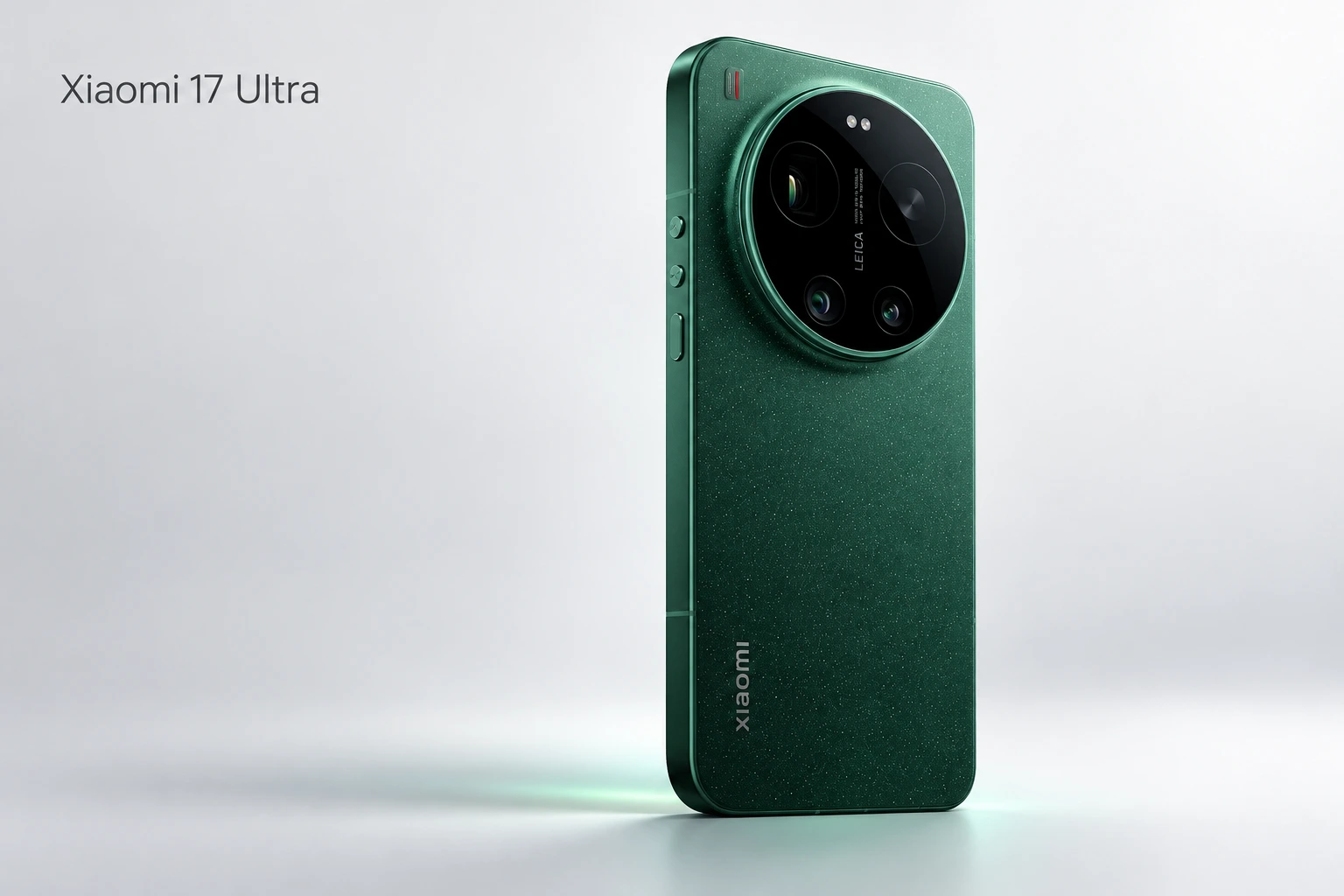
The broad circular Leica camera island dominates the back. Black, White and Starlit Green give buyers a choice between understated and more expressive finishes. The official product artwork shows a flat-sided body and a very different camera arrangement from the ordinary Xiaomi 17.
A prominent camera assembly changes how a phone feels in the hand. Check where your fingers rest in landscape orientation, whether a case protects the lens area and how it sits on a flat surface. Weight alone does not tell the full story; balance and grip matter during a long day of photography.

Official product image: Xiaomi. Black, White and Starlit Green are shown.
Display: A Large Viewfinder and Editing Canvas
The OLED screen offers plenty of room for reviewing images, checking a map or watching video. Its adaptive refresh behavior is useful for mixed workloads, since a static page and a fast-scrolling feed do not need the same refresh rate.
Xiaomi’s peak brightness claim should be read in its stated context. It does not establish sustained full-screen brightness or prove better outdoor visibility than a phone measured under a different method. Reflections, tone mapping and the selected picture mode influence what you actually see. For photography, compare how edited images look on other displays before trusting the phone alone.
Performance: Flagship Hardware With a Practical Storage Choice
The Snapdragon platform, fast memory and storage form a strong base for demanding apps. The device also includes Xiaomi’s 3D Dual-Channel IceLoop cooling system. Those are hardware features rather than proof of a particular sustained frame rate.
A camera-focused buyer should think about storage early. RAW files, high-resolution bursts and video consume space quickly. Choosing more local capacity can reduce interruptions, while a regular transfer and backup routine matters regardless of which tier you buy. A phone is not a safe single archive for important photographs.
Gaming: Powerful Hardware Does Not Remove Software Limits
The large display and flagship processor make gaming an obvious secondary use. However, game support, graphics presets and frame-rate caps remain specific to the title and software version. A 120Hz panel cannot force a game to generate 120 distinct frames every second.
Compare longer tests at a realistic room temperature, especially if you play while using mobile data. Touch response, battery drain and how the camera housing affects your grip deserve attention alongside graphics quality. The most comfortable configuration may be below the maximum preset.
Leica Camera System: Three Different Perspectives
| Camera | Purpose |
|---|---|
| 50MP 23mm main | General photography and low-light work |
| 200MP 75–100mm telephoto | Portraits and flexible longer framing |
| 50MP 14mm ultra-wide | Architecture, interiors and expansive landscapes |
| 50MP autofocus front | Selfies, calls and front-facing video |
The 1-Inch-Type Main Camera and Moving Telephoto Range
A relatively large main sensor gives the camera an interesting hardware foundation. The “1-inch” label is a sensor-format convention, not a statement that the sensor measures a full inch diagonally. Actual results also depend on the lens, stabilization and processing.
The telephoto’s published 75–100mm range is more informative than an extreme digital-zoom headline. It provides a useful portrait-to-detail range, while digital magnification beyond optical capability introduces a different set of compromises. Evaluate hair, foliage and lettering in real samples to see how much genuine detail remains.
Leica color styles offer different interpretations of a scene. Personal preference matters, especially for skin tones and contrast. A pleasing rendering is useful, but compare consistency across cameras and mixed lighting rather than deciding from a single carefully selected photograph.
Video Recording: Resolution Is Only One Decision
Published options include 8K at 30fps and 4K Dolby Vision or Log recording up to 120fps, subject to mode restrictions. These tools are relevant for creators who will edit, grade or slow down footage. They do not mean every camera offers every combination at once.
For everyday clips, stable focus, clean sound and convenient file sizes may be more important. Before an important recording, test the exact mode, check remaining storage and confirm that your editing software handles the files. High-frame-rate capture also benefits from enough light.
Battery and Charging: Use the Global Figures
The global battery and charging specifications are listed in the table above; regional versions must be checked separately. Capacity is useful context but cannot predict your own endurance. A day of navigation and camera use is very different from continuous video playback.
Maximum HyperCharge speeds require compatible equipment and suitable conditions. Xiaomi tells buyers to confirm local adapter inclusion. A high-wattage third-party charger is not automatically equivalent to the required charging protocol. Wireless charging is convenient, but its advertised maximum likewise needs a compatible setup.
HyperOS 3 and AI Features
Xiaomi lists tools for writing, speech recognition, interpretation, search and creative assistance, alongside supported Google experiences. Region, language, connectivity and software conditions affect availability. Check the specific functions you need in your own language.
For a long-term purchase, software is also about ordinary behavior: notification reliability, permissions, backup options and the applications you depend on. Test those basics if moving from another ecosystem. They influence everyday satisfaction more often than a demonstration feature.
Connectivity, Audio and Protection
The global specification includes modern cellular and wireless connectivity, USB data features, stereo audio and ultrasonic fingerprint authentication. Carrier bands, eSIM availability and local services should be confirmed on the exact model before importing.
IP68 describes controlled laboratory tests, not unlimited waterproof use. Lens care is also practical: fingerprints and dust can compromise images regardless of the sensor quality. A clean lens and a reliable grip are inexpensive improvements to any camera phone.
Advantages and Considerations
| Advantages | Considerations |
|---|---|
| Ambitious main and telephoto hardware | Large camera housing affects handling |
| Flexible photography and video modes | Best results require choosing suitable settings |
| Fast wired and wireless charging | Compatible accessories and regional contents matter |
| Large screen and generous storage options | Not the compact choice of the standard Xiaomi 17 |
Who Should Consider the Xiaomi 17 Ultra?
It belongs on the shortlist for mobile photographers who want flexible framing and are willing to carry a larger device. It may also suit creators who want a capable camera and editing platform in the same pocket.
Someone mainly seeking a small phone should compare the ordinary Xiaomi 17. Buyers prioritizing the best camera should compare independent samples from their preferred subjects, then weigh local pricing, warranty and repair support.
Final Thoughts
Xiaomi 17 Ultra offers an ambitious global flagship package centered on photography. The decision should come down to the images you prefer and the size you can comfortably use, supported by independent endurance and performance tests.
Official Sources and Further Reading
Editorial note: This is a specifications-based overview, not a hands-on review. Manufacturer figures are not independent test results. Checked on October 28, 2026. Configurations, services and accessories vary by market. The cover is an AI-created editorial illustration based on official product imagery.