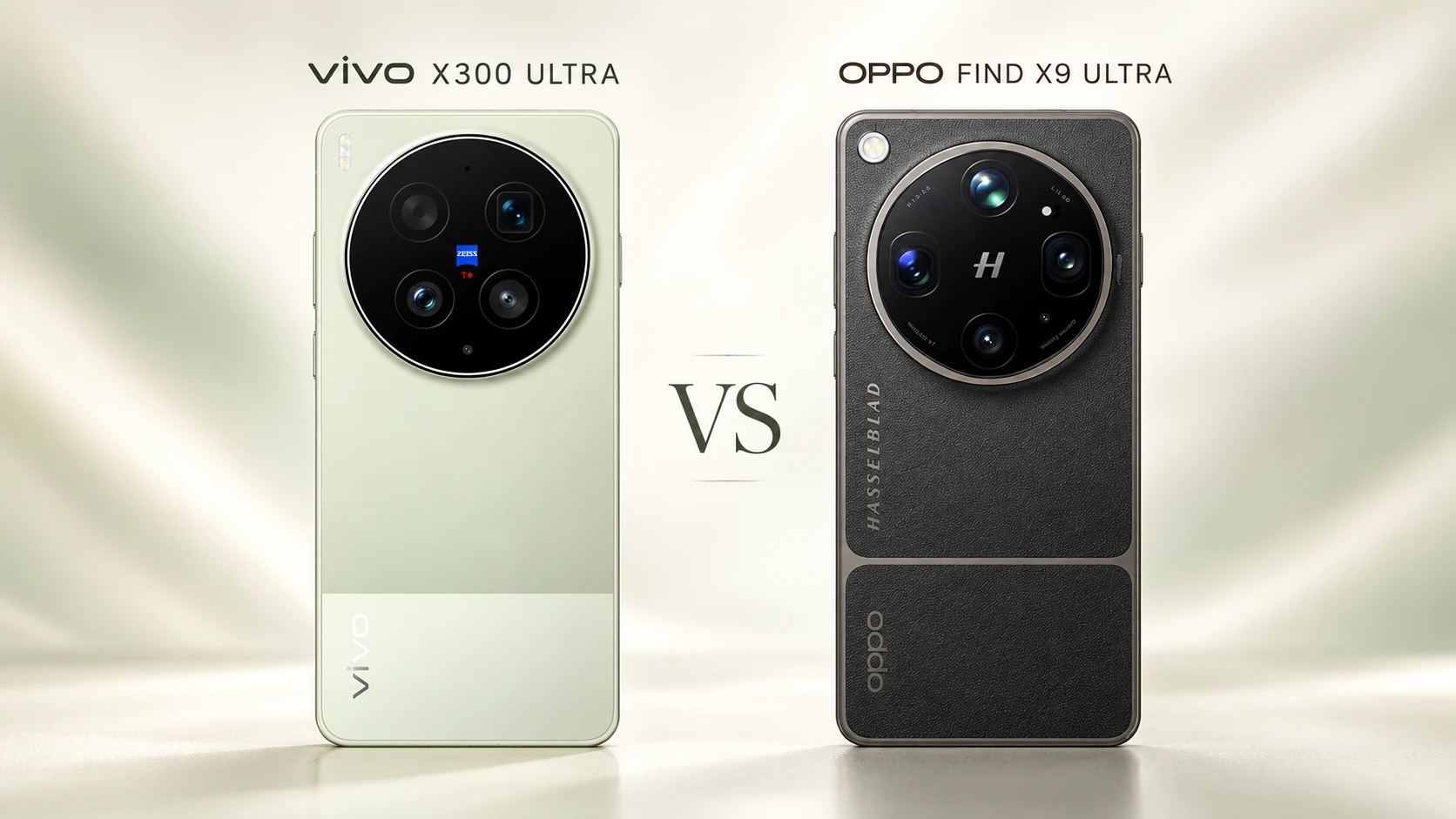
Updated October 28, 2026. The vivo X300 Ultra is worth examining if you like the tighter framing of its 35mm-equivalent main camera. OPPO Find X9 Ultra is the rival to investigate when longer native zoom matters more. Their shared flagship processor makes this a comparison about camera choices, handling and software rather than a simple contest of chip names.
Quick comparison
| Feature | vivo X300 Ultra (global) | OPPO Find X9 Ultra (global) |
|---|---|---|
| Processor | Snapdragon 8 Elite Gen 5 | Snapdragon 8 Elite Gen 5 |
| Main camera | 200MP; 35mm equivalent | 200MP; f/1.5 |
| Telephoto focus | 200MP; 85mm equivalent | 200MP telephoto plus 50MP ultra telephoto; up to 10x optical zoom |
| Ultra-wide | 50MP; 14mm equivalent | 50MP; 123° field of view |
| Screen | 6.82-inch; 3168 × 1440; 1–144Hz | 6.82-inch; 3168 × 1440; 144Hz limited to some games |
| Typical battery | 6600mAh | 7050mAh |
| Charging maxima | 100W wired; 40W wireless | 100W wired; 50W wireless |
| Weight | 232–237g, finish dependent | 235–236g, finish dependent |
Why vivo’s 35mm framing changes the decision
A longer equivalent focal length gives a tighter composition from the same position. That can suit a photographer who naturally isolates a person or a detail. It can also require more working distance when a room is cramped or a group is large.
Our reading of vivo’s lens arrangement is that its main-camera perspective will appeal to people who already enjoy this style of framing. Before buying, try photographing a dinner table and a person indoors. Whether the framing suits your habits matters more than the ZEISS logo alone.
The ultra-wide offers another way to fit a scene, but switching lenses changes the rendering and perspective choices. Do not assume a crop and a dedicated lens always produce interchangeable results.
Telephoto: portrait distance versus long reach
vivo’s native portrait-oriented telephoto and OPPO’s additional long camera serve different priorities. Photographing a person a few steps away is not the same task as isolating a distant detail from a viewpoint. Decide which you do more frequently.
OPPO’s published native reach makes it a logical candidate for the latter use. vivo’s arrangement makes it an interesting candidate for people and documentary-style shooting. These are buying directions inferred from the optics, not measured camera rankings.
vivo also promotes optional telephoto extenders. They are separate accessories with extra cost and carrying weight. Their equivalent focal lengths must not be presented as the reach of the bare phone.
Image quality still needs matched examples
Both employ high-resolution imaging hardware, but equal megapixel counts do not guarantee equal texture, motion handling or color. Check skin tones in mixed indoor light, focus on moving people and consistency when switching between cameras.
For portraits, inspect hair edges and background separation as well as facial detail. For distant subjects, compare the actual framing you need, not only each phone’s most dramatic marketing sample. No direct image-quality winner is claimed here.
Displays and gaming: the same headline can hide a condition
The published panels have the same diagonal and pixel dimensions. OPPO specifically limits its highest refresh mode to certain games; vivo’s parameter page lists a wider adaptive range. Verify supported applications before treating the number as a guarantee of native game frame rate.
The shared processor does not settle sustained performance. If gaming is important, use tests that include temperature and frame pacing after a long session. Neither a refresh ceiling nor a brief benchmark tells you how comfortably you can hold the device.
Battery, charging and carrying comfort
OPPO lists a larger typical battery and a higher wireless charging ceiling. These are specification advantages to consider, while measured daily endurance remains unestablished by this article. Wired peak power is the same headline class and still requires the appropriate equipment.
Finish-dependent weights overlap. Try the exact version, because rear texture, thickness and the camera bump influence comfort. Add a case before judging whether either feels manageable for a full day of travel photography.
Software and ownership can break the tie
The vivo global parameter page lists OriginOS 6 on Android 16. Avoid applying assumptions from older vivo generations or another region’s software. Check the actual phone for language support, notifications and the applications you use.
For either brand, compare the exact regional warranty, supported carrier services and repair options. If an imported bargain creates problems with your daily apps, the camera specification advantage may have little practical value. Price the complete supported purchase, including any photography accessories you really need.
Which phone should you choose?
Choose vivo X300 Ultra if its 35mm main-camera framing and portrait-oriented optical choices match your style. Confirm that you enjoy that perspective in everyday indoor scenes.
Choose OPPO Find X9 Ultra if longer native reach and the larger stated battery matter more. If you are undecided, compare your own subjects on both devices before deciding from camera branding.
Read the individual phone guides
Official sources
- vivo official global specifications
- vivo official lenses and accessory explanations
- OPPO official global specifications
Method: This is an editorial comparison of published manufacturer specifications, not a hands-on test. Recommendations are our interpretation of the listed features; no benchmark, camera ranking or measured battery result is claimed. Regional models, accessories and software features can differ. The AI-created cover follows official device imagery and is an editorial illustration.